What We Do

Services

Every job below gets the same footings and framing details, no matter how big or small the deck.

Home › Services

Everything we take on

Every job below is one we do ourselves across Bryant.

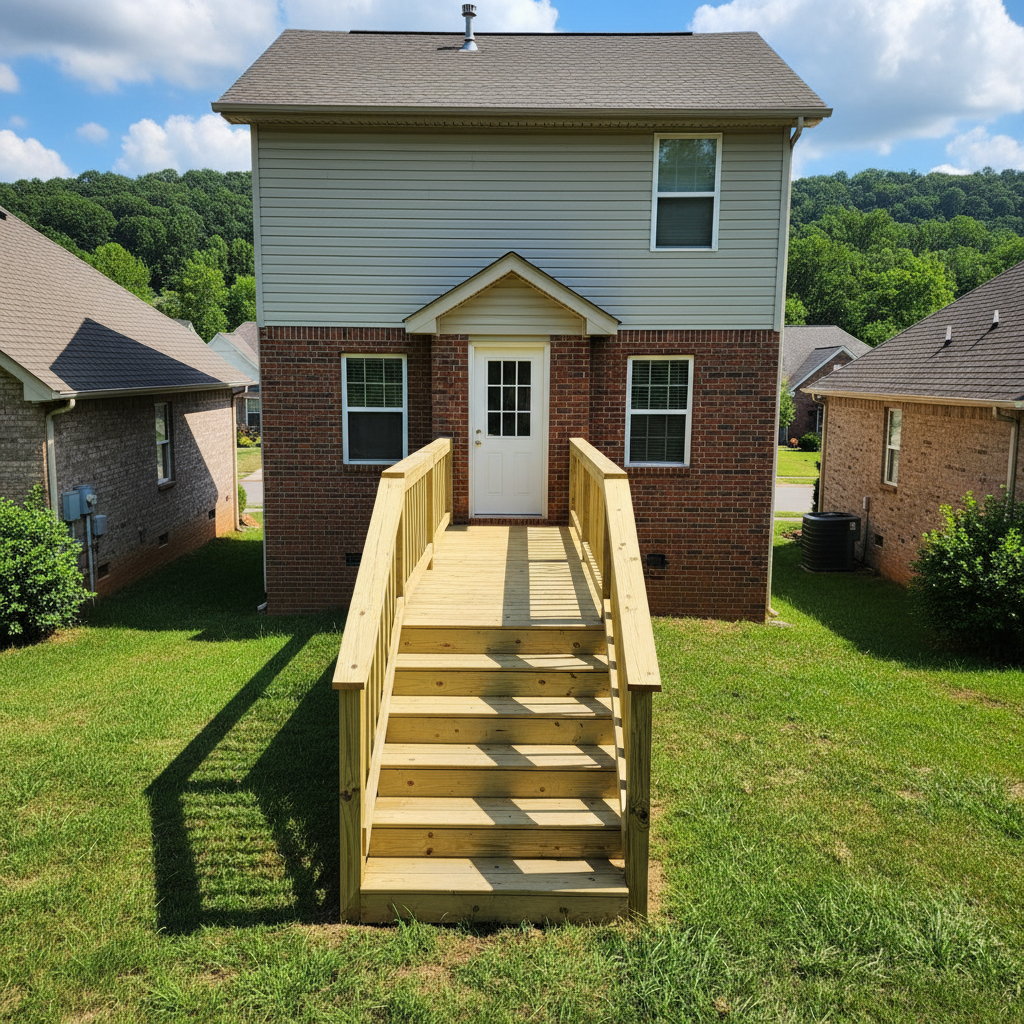
Deck Installation

We dig footings below frost depth, set posts, and frame with pressure-treated joists spaced 16 inches on center. The ledger board gets bolted to the rim joist and flashed so water can't get behind it, which is where most rot starts on an older deck.

Deck Repair

We replace rotted joists, sister beams that have started to sag, and fix railings that move when you lean on them. If the ledger board is pulling away from the house, we'll tell you straight whether it needs new flashing or a full tear-off.

Deck Staining & Sealing

We pressure wash, let the wood dry for a couple of days, then apply a penetrating stain instead of a film-forming one that peels. Arkansas humidity works fast on bare wood, so we time this around a dry stretch in the forecast.

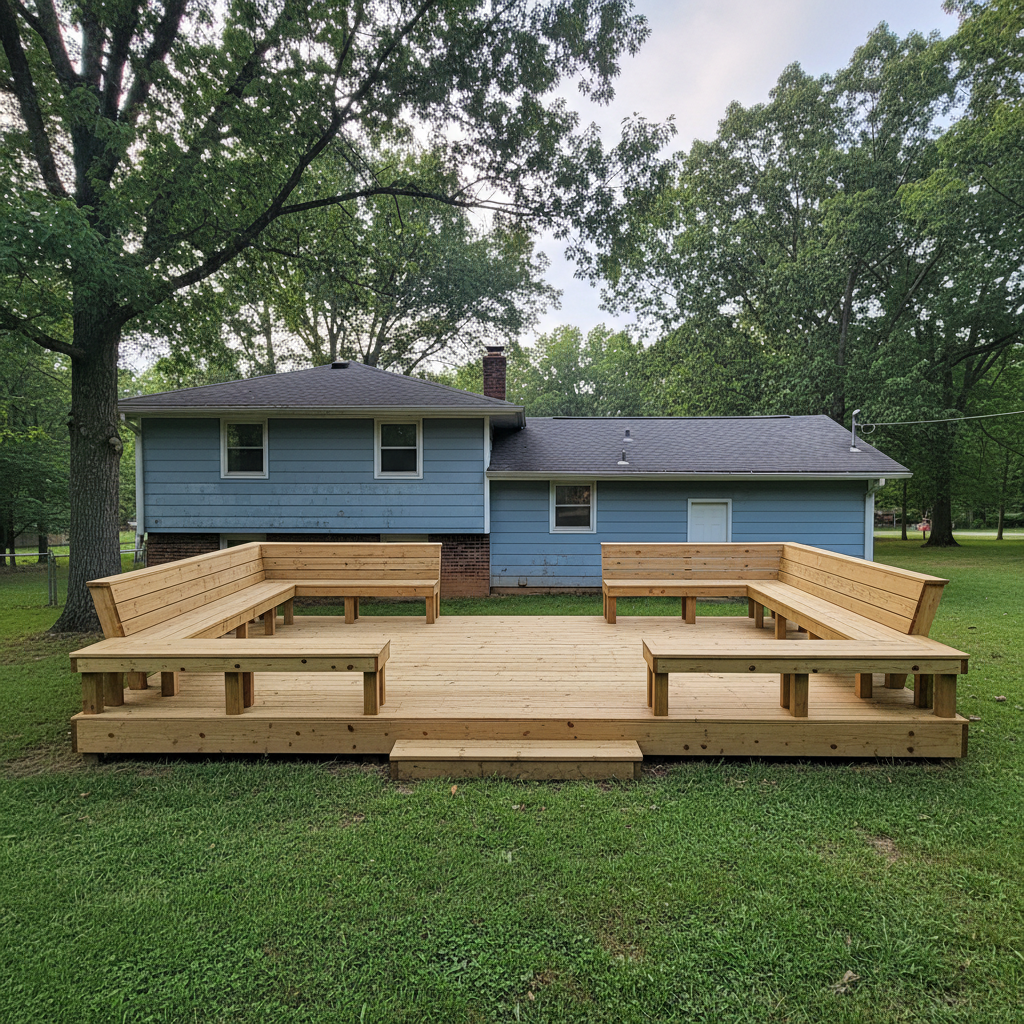
Custom Deck Design

We'll draw up a multi-level deck, built-in bench seating, or a deck that wraps around an existing tree, and walk you through load calculations before any lumber gets ordered. If you've got a slope in the backyard, that's usually where the design gets interesting.

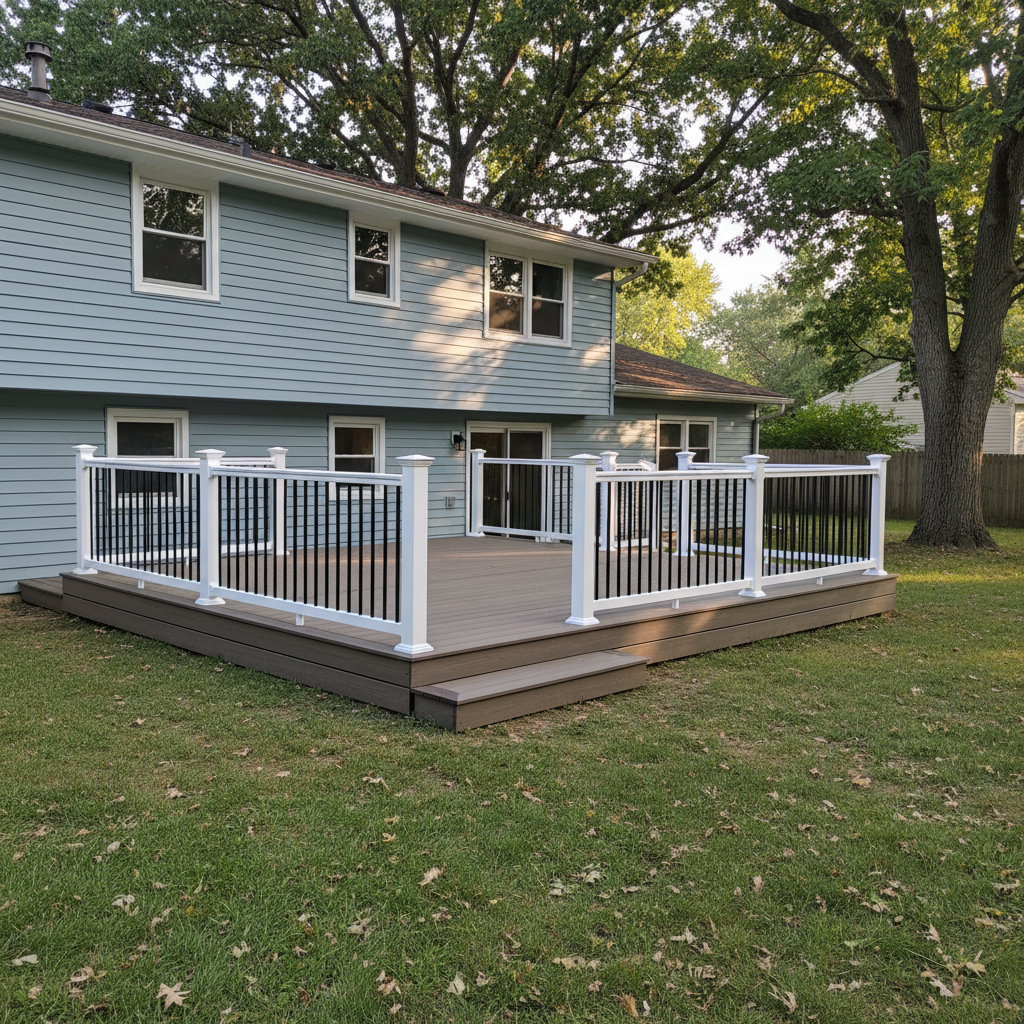
Composite Decking Installation

We install Trex, TimberTech and similar composite boards with hidden fastener clips so you don't see screw heads across the surface. Composite costs more upfront than pressure-treated pine, but you're not restaining it every couple of years.

Deck Railing & Baluster Repair

We rebuild railings to meet the 36-inch height and 4-inch baluster spacing most codes require, which matters if you're selling the house and an inspector walks the deck. Loose posts usually mean the blocking behind them rotted, not just that a screw backed out.

Deck Resurfacing

If the frame underneath is still solid, we'll strip off the old decking boards and lay new ones without rebuilding the whole structure. It's a faster, cheaper fix than a full rebuild when the problem is just the surface.

Screened Porch Construction

We frame and screen in an existing deck or build a new screened porch from the footings up, with a roof tied into the existing structure. Keeps the bugs out without losing the covered outdoor space.

Deck Demolition & Removal

We tear out old decks that are beyond saving, haul off the lumber, and leave the yard graded for whatever comes next. Sometimes that's a new deck on the same footprint, sometimes it's just grass.

Pergolas & Shade Structures

We build freestanding or attached pergolas over existing patios and decks for shade without blocking the whole yard view. Posts get set in concrete the same way a deck post would, so it's not just toggle-bolted to the deck boards.

How It Works

Four steps, and no surprises in any of them.

01

We come and look

You tell us what you want doing, we look at what is actually there, and we ask the awkward questions early.

02

You get a price

In writing, itemised, free. If something might add cost later we flag it now rather than at the end.

03

We do the work

Same crew throughout. We cover your floors, keep the dust down and tidy up before we leave each day.

04

We walk it with you

You point out anything you are not happy with and we fix it before the invoice, not after.

Where We Work

All of this, across Bryant, AR

These are the towns where we're regularly out measuring, framing, and staining decks.

Bryant, AR
Little Rock, AR
North Little Rock, AR
Conway, AR
Benton, AR
Hot Springs, AR
Sherwood, AR
Jacksonville, AR
Cabot, AR
Maumelle, AR
Malvern, AR
Haskell, AR
Common Questions

Things worth asking

Questions that come up once a deck project is actually underway.

Do I need a permit for a new deck?
Most cities require a permit for any deck higher than 30 inches off the ground, and some require one regardless of height if the deck is attached to the house. The contractor typically pulls this permit and schedules the required inspections.
How long does it take to build a deck?
A straightforward single-level deck usually takes one to two weeks from the first footing to the final board, weather permitting. Multi-level decks, screened porches, or jobs requiring engineered plans can take three to four weeks.
Can the work be done within a specific budget?
Decking material choice is the easiest way to adjust a budget, since pressure-treated pine costs significantly less per square foot than composite boards. Reducing the footprint or simplifying the railing design are other common ways to bring a quote down.
Is there a warranty on the work?
Reputable deck contractors offer a workmanship warranty, typically one to five years, covering framing and installation separate from the manufacturer's warranty on the decking material itself. Composite brands like Trex often carry a 25-year limited warranty on the boards.
Who do I deal with during the project?
On most residential deck jobs, the homeowner deals directly with the lead carpenter or crew foreman rather than rotating through different company contacts. That person should be reachable by phone throughout the build for questions.
What decking materials are available?
Pressure-treated pine, cedar, and composite brands like Trex and TimberTech cover most residential deck projects. Pine costs less upfront but needs restaining every two to three years, while composite costs more but needs little more than occasional washing.
Can I still use my yard or house during construction?
Deck construction is exterior work and doesn't typically require access inside the home, aside from an outlet if one's needed for power tools. The main disruption is noise from saws and nail guns during framing.
What should I do to prepare the site beforehand?
Clearing furniture, grills, or potted plants off an existing deck and moving vehicles away from the work area is usually all that's needed before a crew arrives. Underground sprinkler lines or dog fences near the footing locations should be flagged ahead of time.
What if rot or damage turns up once the old deck comes up?
Rotted ledger boards, rim joists, or sill plates hidden under an old deck are a common mid-project discovery and usually require a change order before continuing. A reputable contractor will show the damage and explain the added cost before doing the repair, not after.
How should a finished deck be maintained?
Pressure-treated wood decks need a fresh coat of sealant or stain every two to three years, more often in direct sun, and should be swept clear of leaves that trap moisture against the boards. Composite decking mainly needs an occasional wash with soap and water to prevent mildew buildup in shaded, humid areas.

Not sure what you need?

Describe the problem and we will tell you what it probably is. No obligation.

Call (501) 293-0735